Showing posts with label costing. Show all posts

Wednesday, February 26, 2014

PIA Ratio Studies and Financial Ratios Dashboard
A Perfect Match

Profectus, Inc., a national consulting company that helps printing and packaging organizations improve their business, announced today the addition of a Financial Analysis and Ratios Dashboard in the popular CostRatesAdvisor.com budgeted hourly cost rates software.

The financial dashboard features numerous ratios reports and graphs so companies can benchmark their figures to other companies using the Printing Industries of America’s Ratio Studies*.

For over 90 years the PIA Ratios Studies has been the printing industry’s most valuable financial benchmarking tool for strategic management, investment, productivity, and profitability. The PIA Ratio Studies are a compilation of expenses, assets, salaries, and other financial information from hundreds of printing and related graphic arts firms.

Owners, managers, and analysts can use their CostRatesAdvisor financial information as a benchmark against the PIA Ratios’ industry norms and profit leaders. Some of the ratios presented in the Financial Analysis and Ratios Dashboard include:
  • Sales & Administrative costs ratios
  • Direct Manufacturing costs ratios
  • Payroll costs ratios
  • Cost per employee ratios
  • Cost center and department costs ratios
According to Profectus President Craig Press, CostRatesAdvisor.com has come to be more than a budgeted hourly cost rates program. It’s an excellent tool for determining the break-even cost of your production equipment and services, setting prices, tracking cost trends, and now benchmarking your financials to other companies.”

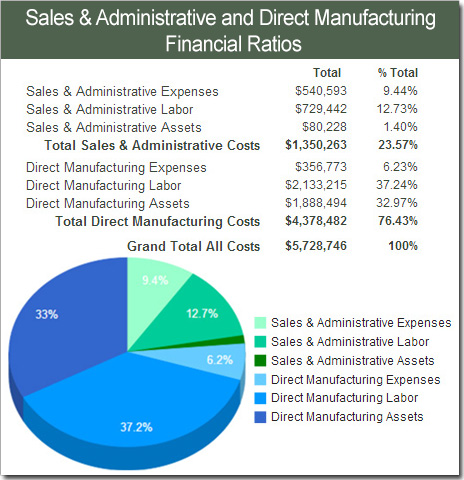
Example Report


Three tiered pricing starting at just $128 for the Basic Edition up to $368 for the fully featured Enterprise Edition makes Cost Rates Advisor very affordable for any size company. To find out more about Cost Rates Advisor, visit www.costratesadvisor.com or call 1-888-868-8662


About Cost Rates Advisor
CostRatesAdvisor.com was designed by industry experts to help companies determine the break-even cost of equipment and services. It provides an accurate picture of a company’s true costs so they can confidently and strategically estimate, price, and cost jobs. Cost Rates Advisor is used by organizations throughout North America spanning all industry segments including commercial, digital, mailing, packaging, labels, large format, screen, and in-plant operations. costratesadvisor.com

About Profectus, Inc.
Profectus is a national consulting company that offers a unique spectrum of professional services with a focus on helping printing organizations improve their efficiency, cost effectiveness, customer service, and profitability by implementing best business practices and embracing technology. For over 20 years our consultants have been contributing to the success of small and large organizations throughout North America spanning all industry segments. www.profectus.com


*PIA Financial Ratio Studies are not included with CostRatesAdvisor but are available through the Printing Industries of America.


Friday, November 22, 2013

10 Ways to Financially Improve Your Printing Organization


Financial performance is a major concern of all organizations, whether you’re a commercial, packaging, digital, large format, or in-plant printing operation. Here are 10 ways you can improve the financial performance of your organization.

1. Improve Administrative Processes
Implement lean principles in your administrative areas to eliminate unnecessary and redundant non-value-added activities, steps, and handoffs in your sales, estimating, order entry, purchasing, invoicing, and accounting workflow.  Put a team together to define the steps required to get jobs through your administrative processes and design a more efficient "Lean" workflow.

2. Implement Industry Best Practices
Best practices are proven methods in which printing organizations have achieved top performance and serve as goals for other companies that are striving for excellence. Why reinvent the wheel? Improve your financial performance by adapting these accepted best practices to your specific needs.

3. Speed Up Throughput And Delivery
Write up orders accurately and effectively, and then use the quickest means available to produce and deliver products to customers. Unnecessary delays can add days or weeks to customer payments. You must pay out considerable costs in paper, wages, and other expenses to produce orders, so you want to get reimbursed as soon as possible.

4. Leverage Technology
The proper use of technology will improve the synergy of your organization and help it run more efficiently and effectively. An integrated management information system (MIS) like Avanti, EFI Monarch, EPMS, ePace, Radius, or Printers Software is a critical tool for managing and operating a financially sound printing organization. A typical MIS incudes estimating, order entry, inventory management, shop floor data collection, scheduling, job costing, and accounting. Implementing an ecommerce solution can eliminate time and costs associated with processing orders, speed your order to cash cycle, minimize inventory, and enhance relationships among customers and suppliers.

5. Keep A Tight Control On Inventory
Paper accounts for approximately 1/3 of your costs, so less cash tied up in inventory generally means better cash flow. While some suppliers offer deeper discounts on volume purchases, if inventory sits on the floor too long, it ties up money that could be put to better use elsewhere. Implement Just-in-time (JIT) inventory practices to reduce in-process inventory. You should not have items sitting in your inventory if it can be replenished before a job goes to press.

6. Review and Reduce Expenses
Take a hard look at all of your expenses. Consider ways to decrease operating costs, but be careful not to cut costs that could impede performance or profits. Reduce production expenses by scheduling better, reconfiguring work shifts, improving job planning, and eliminating spoilage. If you haven't already done so, implement Lean Office and Lean Manufacturing principles.

7. Know Your True Costs
Having a clear understanding of your costs is essential for producing accurate estimates, pricing orders, measuring job costs and profitability, and generating accurate accounting reports. Good job costing and shop floor data collection software can help to make sure that all of your labor and material costs are fully accounted for and absorbed in your estimating cost rates and pricing.

8. Invoice Customers Promptly
A customer cannot pay an invoice until they received it, so the faster you get the invoice to the customer, the faster you’ll get paid. When possible, send an invoice within 1 to 2 days after the order has shipped. A best practice is to establish the invoice amount when the order arrives and as the customer requests changes. The only exception is billable overs and shipping charges. Many companies are expediting the invoicing process by sending PDF invoices to customers using email.

9. Measure Your Performance
If you don’t measure it, you can’t improve it. If you don’t measure it, you can’t manage it. Time after time studies have found a strong correlation between a company's financial performance and effective goal setting. There are various tools for measuring performance including Performance Benchmarks, Key Performance Indicators (KPI’s), Balance Score Cards (BSC), and dashboards. Metrics can assess the health of your organization’s financial, production, cost, quality, and customer service performance.

10. Utilize Your Employees  Better
The need to effectively leverage the skills of employees is critical to improving your financial performance. You may have some people that have evolved into the wrong position over time. Or employees that are overloaded with work while others do not have enough to keep them busy. Take a close look at the skill set and workloads of your staff. Make sure employees are in the position that is best leveraging their capabilities.

If you're interested in learning how Profectus Printing Industry Business Consultants can improve your organization, contact Profectus for a FREE phone consultation at 1-888-868-8662. Or visit our website: www.profectus.com


Cost Rates Advisor Budgeted Hourly Rates Software



Thursday, August 15, 2013

Why Profitable Printing Companies Cost Jobs


Studies show that highly profitable printing companies implement job costing practices. Job costing is the processes of tracking the actual cost incurred to produce an order or job and benchmarking it against revenue. Job costs include labor, equipment, overhead, materials, outside services, and other manufacturing costs.

The benefits of job costing are significant. Using job costing will allow you to identify the most and least profitable areas of your business, so that you can focus on the profitable elements, and try to make the less profitable aspects of your business more efficient. It enables you to hone in on the cost performance of individual jobs, products, customers, production equipment, departments, employees, and your overall business.
   
Job Costing with Budgeted Hourly Cost Rates (BHR)
Budgeted hourly cost rates are an important component of establishing a job’s cost. Budgeted hourly cost rates are a best practice used by the printing and packaging industry for over 100 years. A budgeted hourly cost rate is your out-of-pocket cost associated with each piece of production equipment in your shop. Budgeted hourly cost rates are comprised of operator and helper wages, benefits, rent, leases, equipment depreciation, supplies, utilities, insurance, administrative costs, overhead, and other expenses.

The objective of BHRs is to recover 100 percent of your costs with the production equipment and labor hours you bill out (i.e. prepress, platemakers, presses, digital copiers, wide-format printers, cutters, folders, handwork, etc.).
  
Budgeted hourly cost rates software such as CostRatesAdvisor.com helps printing companies calculate their hourly cost rates using industry formulas and best practices.

Record Keeping
There are several approaches for tracking job costs. The simplest and least expensive method for tracking costs is to have employees write their time on the back of a job ticket or a production time card form. Upon completion of each job, multiply the hours worked by the production equipment hourly cost rate and run a total to get the job’s total cost.

A more efficient and accurate method for tracking job costs is putting computers on the shop floor for the employees to record their activities. There are over 50 shop data collection software products on the market to choose from, varying in capabilities, and ranging in price between $199 and $50,000.

Reporting
There are several key detail and summary reports a company should have for analyzing job costs.

An "Estimate verses Actual Report" is the most important job costing report. It compares a job’s estimated costs to actual costs, identifying any cost variances for each phase of a job, the profit earned on the job, and inefficiencies in estimating or production costs. The results will help you to create more accurate and profitable quotes for future jobs; or improve your production processes. An Estimate verses Actual Report will also help ensure that the customer is properly being invoiced for all the work you did.

 
A job costing summary report that shows cost variances for a range of jobs by product type is essential for determining your most profitable products (your niche), where you need to improve, and support future pricing decisions on similar products.

A job costing summary report that shows a range of jobs by customer will identify your least and most profitable customers and can be a catalyst for future pricing and markup strategies for individual customers.

Other Benefits
Profitable companies have experience many other benefits of implementing job costing including:
  • Forecasting costs and resources necessary to provide particular services or products
  • Defining sales and marketing strategies for products
  • Measuring and improving the performance the operation
  • Support for future equipment investments
  • Identifying spoilage and defects to take corrective actions
Job costing provides knowledge that can make your business more profitable and easier to manage. When done well, it separates the profitable companies from those that struggle to make a profit.
 
By: Craig L. Press
President, Profectus, Inc.
 
To try CostRatesAdvisor.com BHR software for FREE or for more information visit our website http://www.costratesadvisor.com/


Monday, June 3, 2013

An Easier Way To Establish Equipment Budgeted Hourly Cost Rates

Many of our subscribers have been asking for an easier way to calculate and update their equipment budgeted hourly cost rates. After all, the industry best practice is to update BHRs at least annually.
 
For years our consultancy has used software or spreadsheets to calculate BHRs for our clients. We often have to create “workarounds” in these limited software products to get true results. Spreadsheets are a better option but required a lot of work every time we want to update rates or add another piece of equipment, even with our creative Microsoft Excel formulas and links.
 
Which is why we decided to develop the Cost Rates Advisor budgeted hourly rates software. Cost Rates Advisor was designed based on proven cost accounting principles, best practices, and standards used by the industry experts including the Printing Industries of America (PIA), National Association for Printing Leadership (NAPL), Specialty Imaging Graphics Association (SGIA), and Financial Accounting Standards Board (FASB). The software has built-in "best of breed" formulas, intelligence, and functionality that makes it a superior product for developing hourly cost rates.
 
The innovated design of the Cost Rates Advisor simplifies the entry of data with an intuitive, straight-forward user interface. All of the entry screens, reports, and help screens provide hyperlinks and drill downs directly to the source data.
 
A Data Import Wizard saves users hours of manual data entry by importing income statements, budgets, expenses, payroll information, fixed assets, cost centers, and other data directly into the Cost Rates Advisor database. Import templates and field mapping functionality enables the export of data from accounting or MIS software into Cost Rates Advisor.
 
Interested in learning more? You can try the Cost Rates Advisor for just $59 or $39/month for the yearly plan. There is no obligation and you can cancel any time. http://www.costratesadvisor.com/

Example Cost Rates Advisor Detail BHR Report